
You have a startup idea. It feels like the one. You've already pictured the landing page, the feature set, the moment it hits #1 on Product Hunt.
Slow down.
Before you sink six months and thousands of dollars into building something nobody asked for, you need an answer to one question: does anyone actually want this?
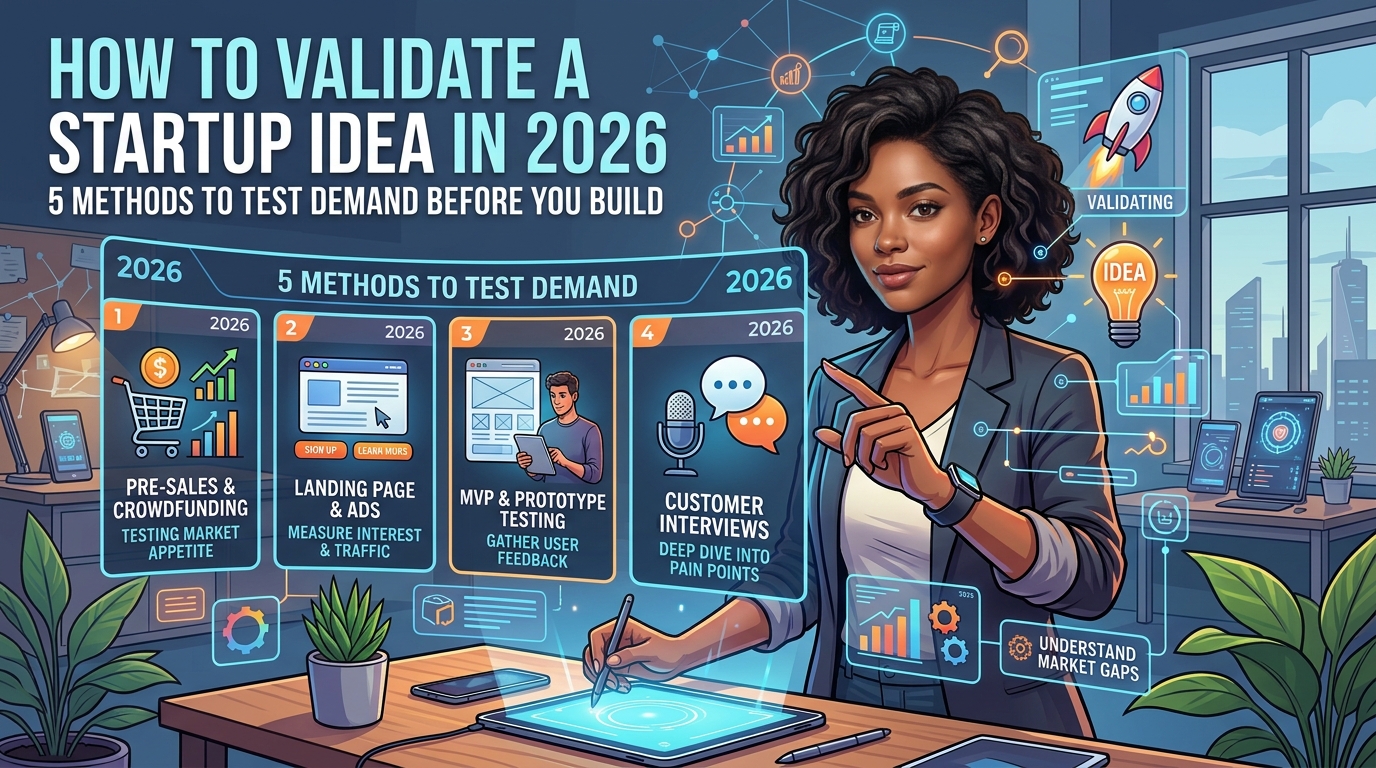
This guide walks you through exactly how to validate a startup idea in 2026 — not with theory, not with surveys, but with real-world demand signals you can gather in under a week. No code required. No big budget. Just a method that works.
Why Most Startup Ideas Fail (And It's Not What You Think)
CB Insights publishes a famous report every year analyzing why startups fail. The #1 reason hasn't changed in a decade: no market need. 42% of failed startups built something people simply didn't want.
Think about that. Nearly half of all startup failures weren't caused by bad technology, poor funding, or weak teams. They were caused by building in the dark — skipping validation entirely.
The founder's fallacy goes like this:
"I have this problem, so others must have it too. I'll build the solution, and they'll come."
Sometimes that works. Most times it doesn't. Your personal pain isn't automatically a market. Validation is how you find out which one it is.
The Cost of Skipping Validation
- 6–18 months of development time lost
- $10,000–$200,000+ in build costs (or opportunity cost if bootstrapping)
- Emotional burnout from launching to silence
- Resume gap spent on something that went nowhere
The cost of validating properly? A week and maybe $100. The math isn't close.
What Startup Validation Actually Means in 2026
Let's clear up a common misunderstanding.
Validation isn't asking your friends if your idea is good. Friends say yes to avoid awkwardness. It isn't running a SurveyMonkey poll on Twitter. Opinions aren't demand. It isn't building an MVP and hoping. An MVP is for testing execution, not testing desire.
Real startup idea validation means extracting a commitment from strangers. That commitment can be:
- An email address given voluntarily
- A pre-order with payment
- A booked discovery call
- A referral shared with a colleague
The key word is strangers. People who don't owe you kindness. If they raise their hand for something that doesn't exist yet, that's signal. Everything else is noise.
The 5 Methods to Validate a Startup Idea (Ranked by Speed)
Here are the five approaches that work in 2026, ordered from fastest to most robust. Start at the top and work your way down until you have enough signal.
Method 1: The Waitlist Landing Page (1–2 Days)
This is the fastest validation method available right now. You create a simple landing page that describes your product as if it exists, add an email signup form, and drive targeted traffic to it.
What you need:
- A clear pain statement in headline form
- A description of the outcome your product delivers
- An email capture form
- A tool to host it — Waitly or similar
How to measure success:
| Signups in Week 1 | Signal Strength | What to Do |
|---|---|---|
| 0–20 | Weak | Iterate messaging or reconsider the problem |
| 20–100 | Moderate | Good signal, dig deeper with conversations |
| 100+ | Strong | Build with confidence, you've found demand |
Why this works: You're measuring actual behavior, not stated intent. Someone giving you their email is a small but real commitment. Do it at scale and patterns emerge fast.
The landing page itself doesn't need to be beautiful. It needs to communicate a painful problem and a desirable outcome. Polish comes later. Speed matters now.
Method 2: The Smoke Test (3–5 Days)
A smoke test takes the waitlist concept further. You create a landing page that looks like a real product — pricing, features, signup button — but when someone clicks "Get Started" or "Buy Now," they see a message explaining the product is in development and inviting them to join the waitlist.
This measures purchase intent more accurately than a simple email capture because the user believes they're about to buy or sign up.
When to use it: After the waitlist page shows some traction and you want to test pricing sensitivity or feature prioritization.
Ethical note: Always be transparent on the follow-up page. Never take actual payment for something that doesn't exist. "We're finalizing early access — join the waitlist and get 30% off at launch" is honest and effective.
Method 3: The Pre-Sell (5–10 Days)
For this method, you actually sell the product before building it. This works especially well for:
- SaaS tools with a clear ROI
- Services or consulting offerings
- Digital products like courses or templates
You accept payment via Stripe or Gumroad with a clear delivery timeline. If people pay, you build. If they don't, you refund and move on.
This is the strongest possible validation signal. Cash commitment beats email commitment every time. But it requires more setup and a higher level of trust-building on your page.
Method 4: The Problem Interview (3–7 Days)
Sometimes the best validation is direct conversation. Find 10–15 people in your target market and ask them about the problem — not your solution.
The script that works:
- "Tell me about the last time you experienced [problem]."
- "How do you currently solve it?"
- "What have you tried before that didn't work?"
- "How much does this problem cost you in time or money?"
Don't mention your idea until the very end, if at all. You're not pitching. You're listening. If people aren't passionate about the problem, no solution will excite them.
Method 5: The Build-in-Public Sprint (Ongoing)
This is a compounding strategy. You share your validation journey publicly on X, LinkedIn, or a newsletter — posting your landing page, sharing signup milestones, asking for feedback, and building an audience alongside the product.
Benefits:
- Audience = built-in first customers at launch
- Feedback loops tighten with every post
- Social proof accumulates visibly
Tradeoff: This requires consistent posting and transparency. Not every founder is comfortable building in public. But for those who are, it's the highest-leverage validation method available.
How Many Signups Do You Actually Need?
This is the question everyone asks. Here's a useful framework instead of a magic number:
Minimum viable signal = 50–100 signups from your target audience.
But that number shifts depending on what you're building:
- B2B SaaS ($50–$500/mo): 50 targeted signups is solid. Decision-makers are harder to reach but higher value per conversion.
- Consumer app (free or freemium): You need more — 200–500+. Consumer attention is cheap but fickle.
- Marketplace (two-sided): Validate each side separately. 30–50 on the supply side and 100+ on the demand side signals viability.
- High-ticket service or consulting: 10 qualified leads who book a call is stronger signal than 500 passive emails.
The metric that matters more than signup count: conversation depth. Are signups replying to your welcome email? Asking questions? Forwarding the page? That's the difference between polite interest and genuine demand.
Common Validation Mistakes That Waste Your Time
Mistake 1: Asking Friends and Family
Your mom thinks your startup idea is brilliant. So does your co-worker who doesn't want to hurt your feelings. This isn't validation. It's emotional support. Seek it separately from actual market feedback.
Mistake 2: Validating the Solution Instead of the Problem
"Would you use an AI-powered meal planning app?" is the wrong question. The right question: "Tell me about the last time meal planning frustrated you." If people don't care deeply about the problem, no feature set saves you.
Mistake 3: Stopping at Positive Feedback
"Great idea!" is the most dangerous phrase in startups. It feels like validation but means nothing. Only action — signups, payment, referrals — counts. Polite enthusiasm is a trap.
Mistake 4: Building an MVP to Validate
An MVP tests whether you can execute, not whether the market wants the thing. Build an MVP after validation confirms demand. Use landing pages, not code, to test desire. The MVP comes second.
Mistake 5: Waiting Too Long to Launch the Validation Page
Perfectionism kills validation. Your waitlist page doesn't need a custom domain, a polished logo, or pixel-perfect design. It needs to go live today. The signal you gather in the next 72 hours is worth more than any amount of pre-launch polishing.
A Real-World Example: Dropbox's Validation Playbook
Before Dropbox was a $10 billion company, Drew Houston had a problem: explaining file syncing was hard. A product demo video was too complex for early-stage. So he did something simple and brilliant.
He created a 3-minute screen recording showing exactly how Dropbox would work. No product existed yet. It was a prototype demo posted to Hacker News with a waitlist signup.
Result: The beta waitlist jumped from 5,000 to 75,000 overnight.
Notice what Houston didn't do: he didn't build the full product. He didn't raise money first. He didn't ask people if they'd use it. He showed the vision, made it tangible, and measured commitment.
That's the validation mindset: show, don't ask. Measure behavior, not opinions.
The 7-Day Validation Sprint: Your Action Plan
Here's exactly what to do starting today.
Day 1: Sharpen Your Problem Statement
Write this and don't move on until it feels painfully specific:
I help [specific person] who struggles with [specific, recurring problem] by providing [unique mechanism] so they can [desirable outcome].
Example: "I help freelance designers who struggle with late-paying clients by automating friendly invoice follow-ups so they can get paid on time without awkward conversations."
Day 2: Build Your Waitlist Page
Use Waitly to create a simple landing page in under an hour. Include:
- Headline naming the pain
- Subheadline describing the outcome
- Email signup field
- Optional: early-adopter incentive (lifetime discount, exclusive access)
Go live. Don't overthink design. Done beats perfect.
Day 3: Drive First Traffic
- Post on your personal LinkedIn, X, or relevant Slack groups
- Share in 2–3 niche communities where your audience hangs out
- Set up a small paid test ($50 on Meta or X ads) if budget allows
Day 4: Review Early Signal
Check signup count and traffic sources. Which channel performed best? Double down there.
Day 5: Talk to Signups
Email 10 signups personally. Ask:
- What made you interested?
- What's your current solution for this problem?
- What would make this a must-have for you?
Day 6: Iterate or Pivot
Based on feedback and signup velocity, decide:
- Strong signal → plan the build
- Mixed signal → tweak messaging and retest
- No signal → take the lesson and explore the next idea
Day 7: Document Everything
Share what you learned publicly. A thread, a post, a note to yourself. The clarity you gain from articulating your findings is as valuable as the data itself.
Tools to Validate Your Startup Idea
You don't need much. Here's the lean stack:
- Waitlist page builder: Waitly — purpose-built for validation landing pages, handles email capture and referral tracking
- Typeform or Google Forms — for problem interviews and surveys
- Calendly — for scheduling discovery calls with signups
- Plausible Analytics — simple, privacy-first traffic tracking
- Stripe or Gumroad — if you're pre-selling and need payment collection
The entire stack costs under $30/month to start. No excuses.
What Happens After Validation
The validation sprint ends with a clear decision point.
If demand is confirmed: Congratulations. You've de-risked your startup dramatically. Now build the MVP, but only the features your waitlist conversations indicated are essential. Your first users are already waiting — launch to them first.
If demand is uncertain: Don't build yet. Iterate the landing page headline. Try a different audience channel. Test a more specific problem angle. Many good ideas fail validation because the messaging was wrong, not the concept.
If demand is absent: This isn't failure — it's efficiency. You spent one week instead of one year learning this lesson. Move to the next idea. The most successful founders cycle through multiple validation sprints before landing on the one that resonates.
Start Validating This Weekend
Most startup ideas die in silence because the founder never tested them out loud. Don't let that be you.
You have the framework. You have the tools. You have the 7-day sprint plan. The only missing piece is your willingness to put something imperfect into the world and see how it breathes.
Build a landing page. Drive traffic. Measure commitment. Then decide.
The market is waiting to tell you if your idea matters. You just have to ask.
Ready to test your startup idea this weekend? Create your validation waitlist on Waitly — no code, no cost to start, go live in under an hour.